


Invertebrates


Sea Sponges (French: Les Éponges de Mer) - Phylum: Porifera (Latin: hole-bearing)
Sponges are recognized as the simplest of all multicellular animals, yet they come in a vast diversity of colors and forms: barrel, vase, tube, ball, encrusting, and rope sponges. Because they are stationary, they are easy to spot and identify during your dives. With thousands of species existing globally, they are a fundamental part of the underwater ecosystem.
Cnidarians (French: Les Cnidaires) - Phylum: Cnidaria (Latin: a nettle)
Cnidarians are fascinating animals that include corals, anemones, and jellyfish. Named after their specialized stinging cells, they exhibit two main body forms: the stationary polyp and the free-swimming medusa. Like sponges, they come in a wide variety of shapes, sizes, and vibrant colors. Because many are sessile, they are a frequent sight on the reef, making them both easy to observe and essential to the underwater ecosystem.
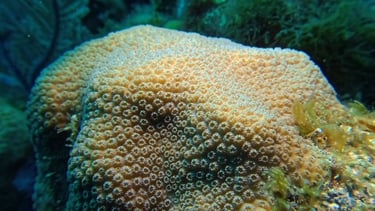
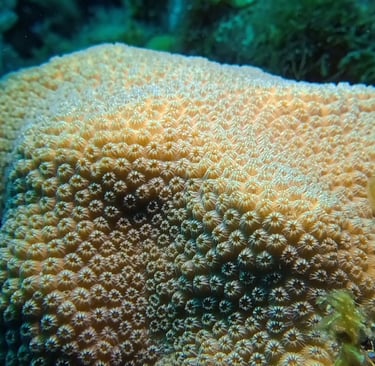
Stony Corals are an essential foundation for the reef ecosystem. Reefs exist because of coral. They are colonies of tiny animals called polyps and come in different shapes and forms: branching, blade, ridged, ball and encrusting.
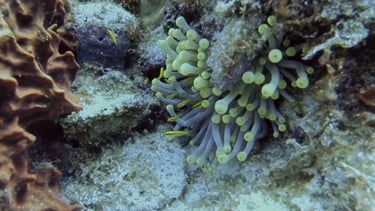
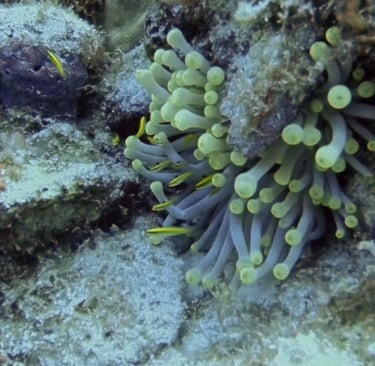
Beyond the stony corals, this group includes a variety of other fascinating animals like soft corals, gorgonians, and hydroids. Because they are stationary and often have delicate, branching shapes, they are frequently mistaken for plants. This group also includes single-polyp animals such as a large variety of anemones and the very unpopular jellyfishes.
Stony Corals (French: Les Coraux Durs)
Others Cnidarians (French: Les Autres Cnidaires)
Sea Worms (French: Les Vers Marins)
Flatworms (French: Vers Plats) - Phylum: Platyhelminthes (Greek: broad flat worm)
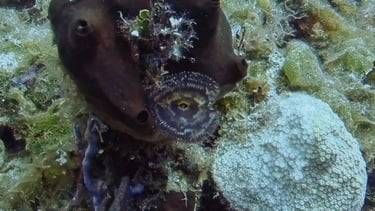
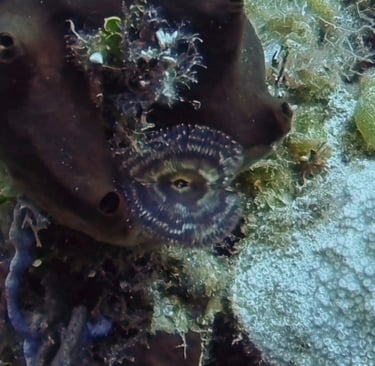
Segmented Worms (French: Vers Segmentes) - Phylum: Annelida (Latin: little ring)
Ribbon Worms (French: Vers en Ruban) - Phylum: Nemertea (Greek: sea nymph)
Horseshoe Worms (French: Vers en Fer a Cheval) - Phylum: Phoronida (Greek: Zeus' mistress!)
Seaworms are diverse and often overlooked inhabitants of the underwater world. Ranging from tiny, tube-dwelling species to more visible, mobile worms, they display incredible colors and patterns. While many burrow into the sand or hide within reef crevices, spotting one is a special discovery for any diver.
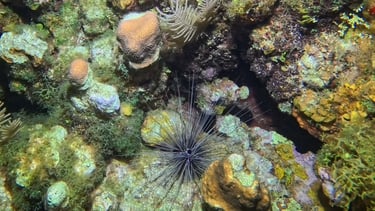
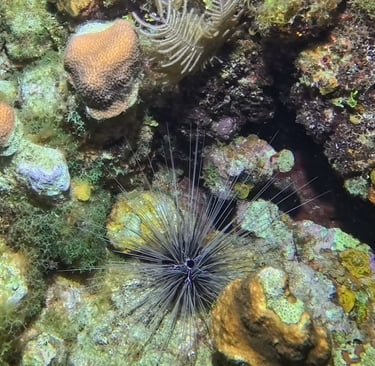
Echinodermers (French: Les Echinodermes) - Phylum: Echinodermata (Greek: spiny skin)
Echinoderms are a unique group of marine invertebrates characterized by their 5-part radial symmetry. They are well-known for their specialized tube feet, which they use for movement, capturing prey, and sensing their surroundings. This phylum includes a diverse range of animals, such as sea stars, brittle and basket stars, sea urchins, sea cucumbers, and feather stars. They play crucial ecological roles; for example, sea cucumbers act as "vacuums" of the ocean by recycling organic nutrients.
Molluscs (French: Les Mollusques) - Phylum: Mollusca (Latin: soft body)
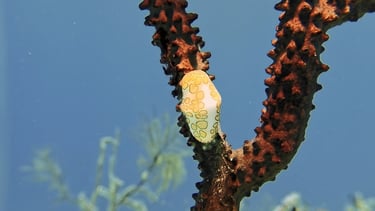
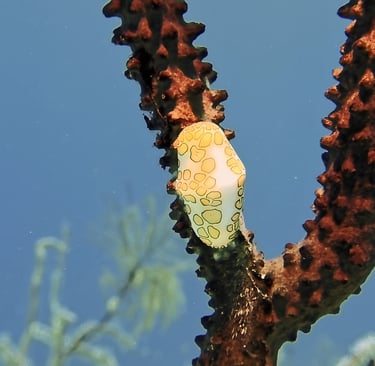
Mollusks make up the second largest animal phylum, encompassing a diverse array of species that range from those with protective, colorful shells to those with no shells at all. Defined by their soft bodies and specialized muscular foot, this group includes major subgroups such as gastropods (snails, sea slugs, nudibranchs), bivalves (clams, mussels, and oysters), and cephalopods (squid, cuttlefish, and octopus). They exhibit various ecological roles and survival strategies; for example, many graze on algae or filter feed, while others are sophisticated predators that have evolved remarkable camouflage skills to protect themselves.
Crustaceans (French: Les Crustaces) - Phylum: Arthropoda (Greek: jointed leg) - Subphylum: Crustacea (Latin: covered by a hard shell)
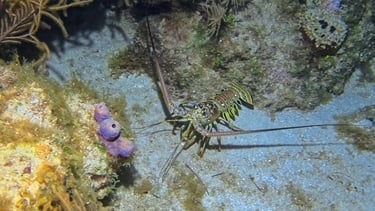
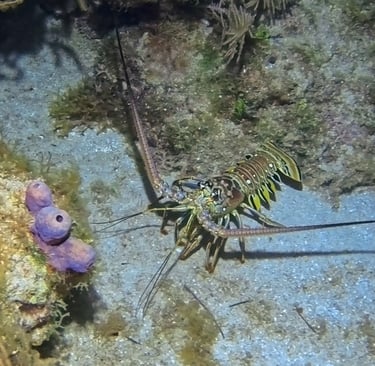
Most marine arthropods are crustaceans, the largest of all animal phyla. These animals are characterized by a hard exoskeleton that provides protection but requires them to periodically molt, or shed their outer shell, in order to grow. This diverse group includes well-known species such as crabs, lobsters, shrimp, and barnacles. Crustaceans fill a variety of ecological roles, ranging from tiny planktonic organisms to larger scavengers and predators that inhabit the sea floor.
Not all marine invertebrates are included here and some smaller groups, not as prevalent and visible are not covered.
Address
2543 N. Reynolds Rd.
Toledo, OH 43615
© 2026 Weightless Adventures. All rights reserved.
Content in this website was created with the assistance of AI (Google Gemini). All photographs are 100% original and shot by me or otherwise noted.