


Vertebrates
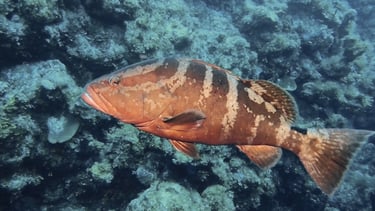
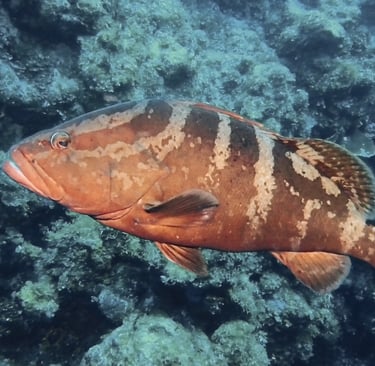
Certainly the easiest to spot for divers, bony fish represent the most diverse group of vertebrates in the ocean. They occupy virtually every marine habitat, from shallow tropical reefs to the deep sea, and play vital roles in the ecosystem as both predators and prey. Characterized by skeletons made of bone rather than cartilage, identifying bony fish underwater is a rewarding skill; look closely at their overall body shape (elongated, rounded, flattened …), observe the positioning and structure of their fins, enjoy their complex coloration and camouflage ability, and identify their movement and behavior. There is always a new fish for you to discover.
Bony Fish (French: Les Poissons) - Class: Osteichthyes (Greek: bone and fish)
Marine Eel (French: Les Anguilles) - Class: Actinopterygii (Greek: ray-finned) - Order: Anguilliformes
All vertebrates are part of the Phylum: Chordata (Latin: having a spinal cord), so here for the grouping, the Class will be used.
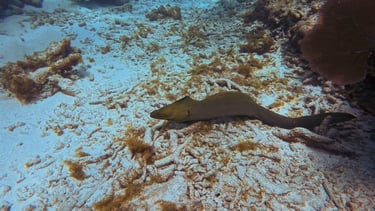
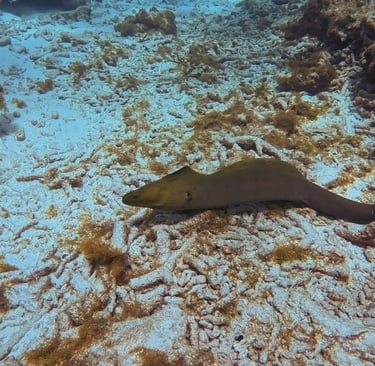
Marine eels, particularly Moray eels, are fascinating predators found in coral reef environments, typically hiding in cracks and crevices. While they are nocturnal and free-swimming at night, divers often encounter them during the day. Within the order Anguilliformes, eels are also classified into other families, such as Conger eels, often found on reefs, and Snake eels, which frequently inhabit sandy environments.
Sea Turtle (French: Les Tortues de Mer) - Class: Reptilia (Latin: crawling) - Order: Testudines
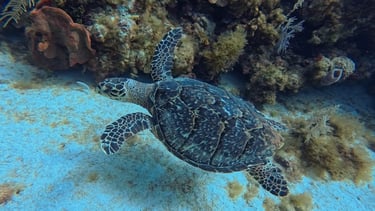
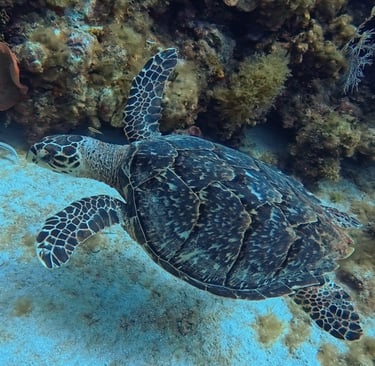
Sea turtles are ancient marine reptiles that play essential roles in ocean health, often grazing on seagrasses and sponges or, in the case of the massive leatherback, feeding on jellyfish. They must return to the surface to breathe, and unlike many other marine creatures, they lay their eggs on sandy beaches. Frequently encountered by divers in tropical waters, it is always a pleasure to see one.
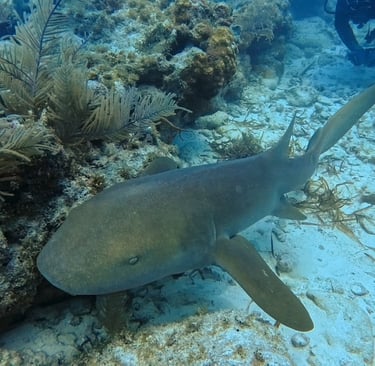
Cartilaginous Fish (French: Les Poissons Cartilagineux) - Class: Chondrichthyes (Greek: cartilage and fish)
Cartilaginous fish include sharks and rays and are defined by skeletons made entirely of cartilage rather than bone. Sharks inhabit diverse locations, coral reefs, open ocean, and deep sea but common species might be encountered around reefs in open water. Rays are typically found on shallow, sandy ocean floors. They are often inconspicuous because they bury themselves in the sand to hide from predators.

Cetaceans (French: Les Cétacés) - Class: Mammalia (Latin: of the breast)
Cetaceans are a diverse group of fully marine mammals that include whales, dolphins, and porpoises. Unlike many other marine vertebrates, they are air-breathing and spend their entire lives in the water, having evolved specialized adaptations such as streamlined bodies for efficient swimming. This group is widely recognized for their advanced intelligence and complex social behaviors, with many species utilizing echolocation to navigate and communicate effectively within their vast underwater environments.


Address
2543 N. Reynolds Rd.
Toledo, OH 43615
© 2026 Weightless Adventures. All rights reserved.
Content in this website was created with the assistance of AI (Google Gemini). All photographs are 100% original and shot by me or otherwise noted.